
January 15, 2026
Frédéric Tessier — Metrology Research Centre

Lunch and Learn Series on AI
Talk to the Machine:
Getting Started with AI and Prompts

“Artificial Intelligence is not cool.”
— me
AI declaration
I used generative AI in creating this presentation for brainstorming,
refining terminology and phrasing, translating text fragments, improving writing style, generating images, and exploring compelling examples.
Déclaration d’IA
J’ai utilisé l’IA générative dans l'élaboration de cette présentation :
pour alimenter ma réflexion, affiner les formulations, traduire des passages, peaufiner le style, générer des images et explorer des exemples probants.
Acknowledgement
- Patricia Oakley — Program Leader, AI for Design
- Digital Technologies, Digital Champions
- NRC AI Zone development team
- Daniel Lowcay and Nina Carter
Remerciements
- Patricia Oakley — Chef de programme, IA au service de la conception
- Technologies numériques, Champions numériques
- Équipe de développement de la Zone IA du CNRC
- Daniel Lowcay et Nina Carter
“Artificial Intelligence is not cool.”
— me
“I think you’re wrong —
AI is genuinely fascinating.”
— claude.ai, Opus 4.5
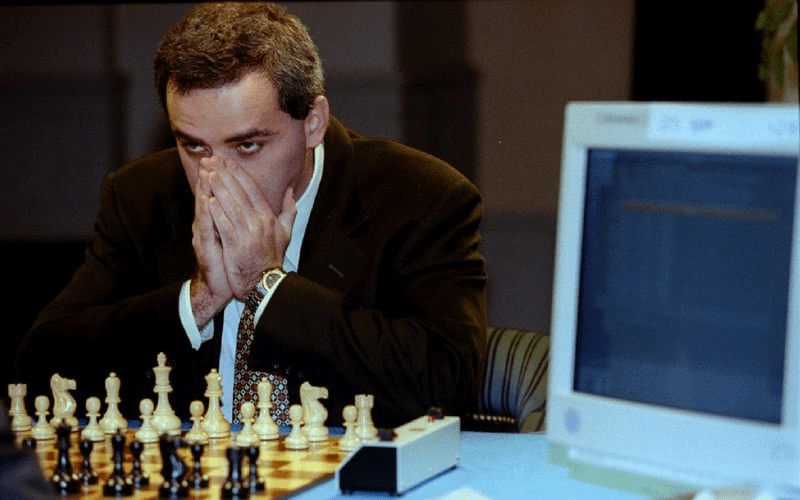
Deep Blue defeating Kasparov
is “fascinating” forever
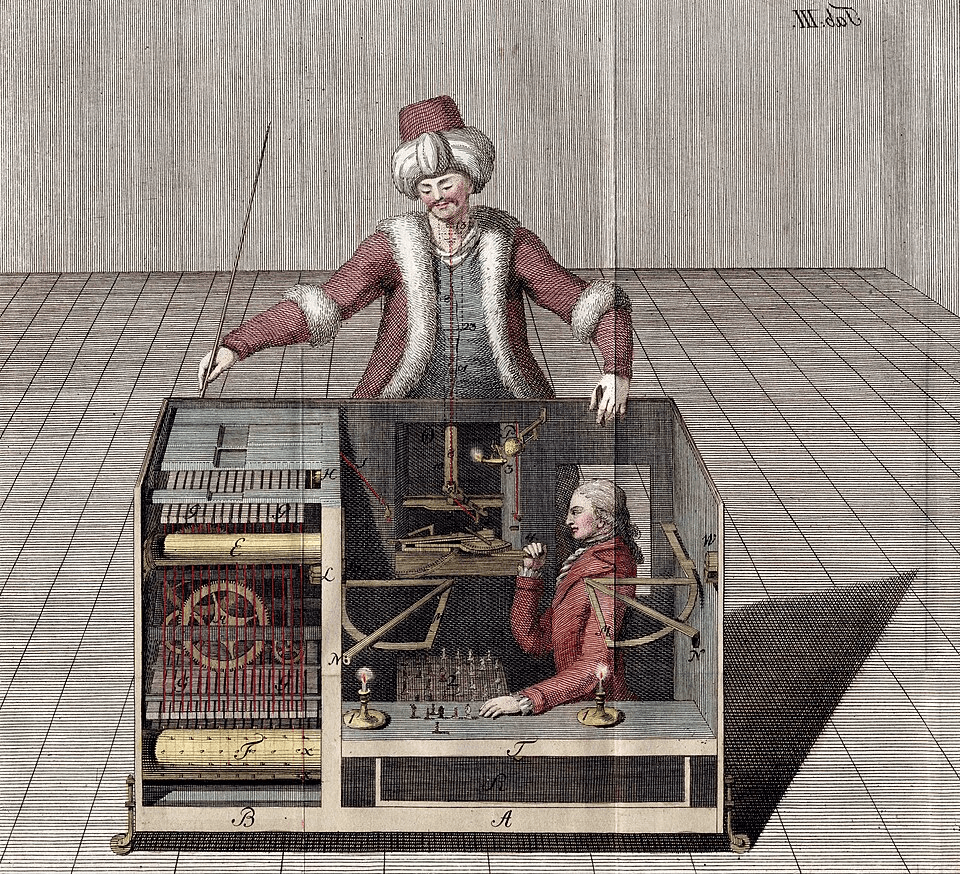
The automaton chess player
was “cool” for 84 years !
instructions

result
(deterministic)
Processors
1950s
programmed calculation
We grew up in a conventional computing era
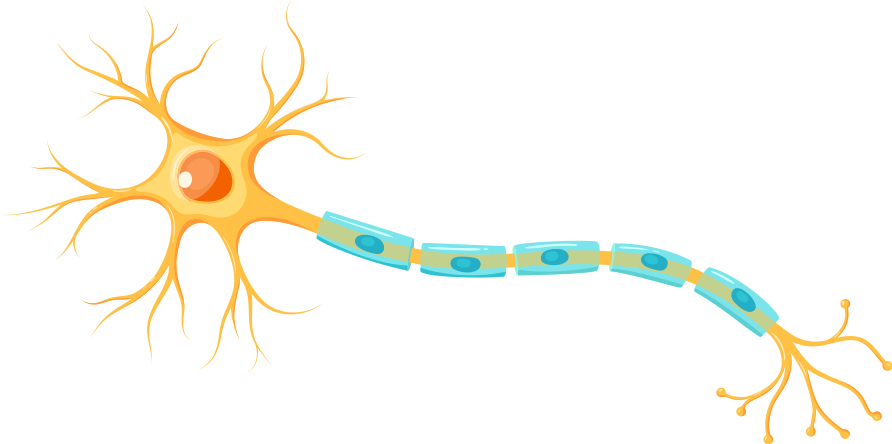
Neural networks
1980s
memory and learning is
achieved by adjusting the
strength of the connections
synapses
no data is stored,
only connection
strengths
axon
neuron
instructions
result
(deterministic)
Processors
1950s
programmed calculation
Neural nets enable stimulus-response computing
Neural networks
1980s
neuron
synapses
axon
no data is stored,
only connection
strengths
memory and learning is
achieved by adjusting the
strength of the connections

instructions
result
(deterministic)
Processors
1950s
programmed calculation
Neural nets enable stimulus-response computing
Neural networks
1980s
no data is stored,
only connection
strengths
memory and learning is
achieved by adjusting the
strength of the connections
input signals
output signals
instructions
result
(deterministic)
Processors
1950s
programmed calculation
Neural nets enable stimulus-response computing
Neural networks
1980s
no data is stored,
only connection
strengths

input signals
output signals
instructions
result
(deterministic)
Processors
1950s
programmed calculation
Neural nets enable stimulus-response computing
no data is stored,
only connection
strengths
prompt . . .
. . . completion
(probabilistic)
Generative artifical intelligence (AI)
2010s
autonomous
learning
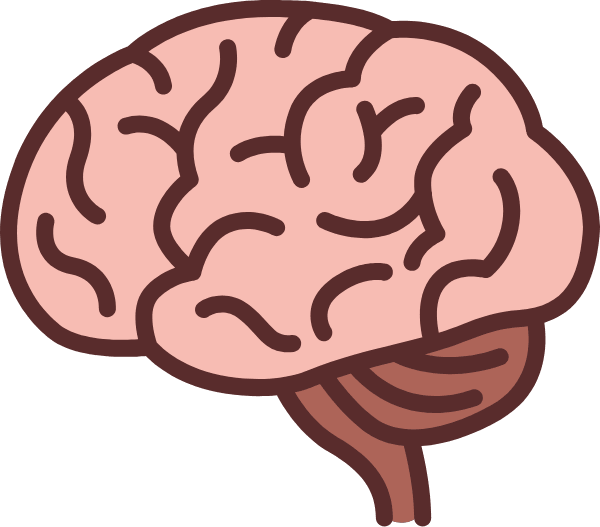
transformer
neural net
Millions of
“neurons”
instructions
result
(deterministic)
Processors
1950s
programmed calculation
Neural nets enable stimulus-response computing
response
(probabilistic)
specialized
training
input signals
output signals
Neural networks
1980s
stimulus
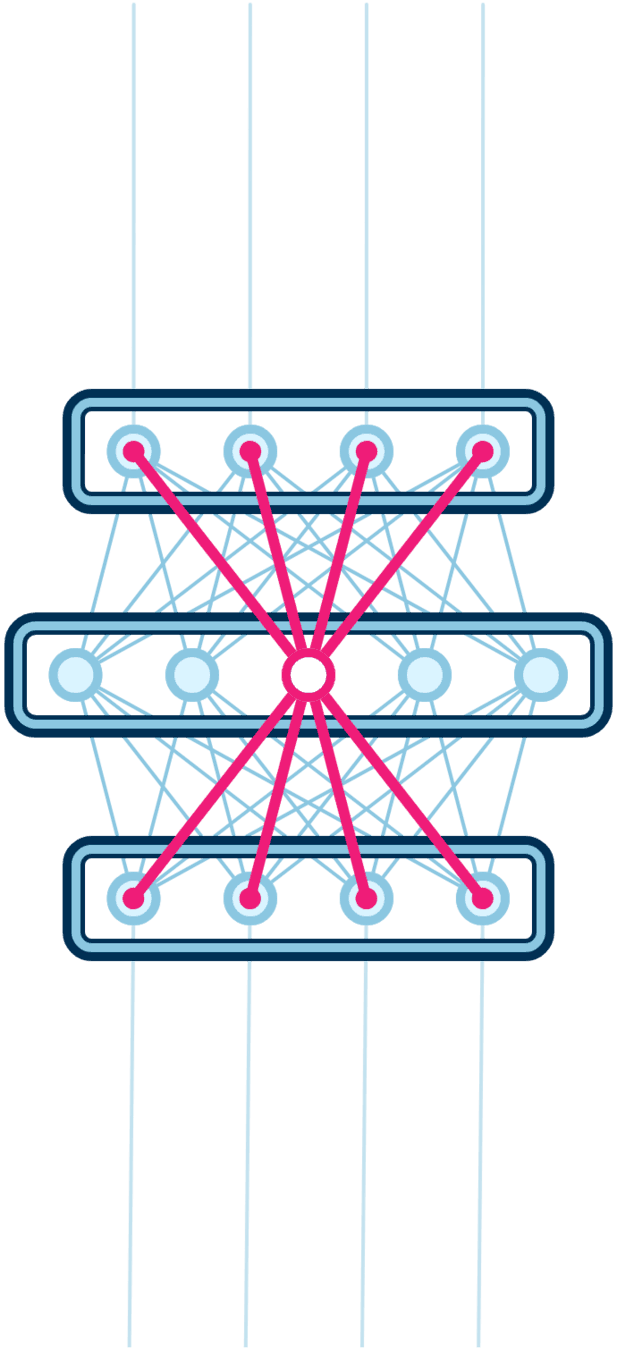
back
propagation
instructions
result
(deterministic)
Processors
1950s
programmed calculation
~ 1 trillion
parameters
( × 10 ¹² )
~ 100 trillion
parameters
in human
brain
prompt . . .
. . . completion
(emergent)
Generative artificial intelligence
2010s
self-supervised
learning
transformer
neural net
100s millions
“neurons”
Neural networks
1980s
stimulus
response
(probabilistic)
specialized
training
Transformers change everything
`
~ 1 trillion
parameters
( × 10 ¹² )
~ 100 trillion
parameters
in human
brain
prompt . . .
. . . completion
(emergent)
Generative artificial intelligence
2010s
transformer
neural net
Dr. Michael Wooldridge, Big Think (May 17, 2023)
self-supervised
learning
Vaswani et al. Attention is all you need (2017)
211 900 citations
The BIG surprise for everyone !
“ Large language models (LLMs) like
ChatGPT are essentially a very
sophisticated form of auto-complete.
(...) But the unexpected thing is that,
in ways that we don’t yet understand,
LLMs acquire other capabilities as well. ”

“Attention is all you need”
Simple rules lead to surprising capabilities
Some capabilities were not explicitly programmed or directly trained. They emerged from a singular objective: predicting the next token in large language models (LLMs):
-
They acquire chain-of-thought reasoning abilities without being trained to do so.
Wei et al., Emergent Abilities of Large Language Models, TMLR (2022)
-
They understand that others can hold false beliefs, a cognitive milestone in children.
Strachan et al., Testing theory of mind in large language models and humans, Nature (2024)
-
Open-source LLMs translate between language pairs never seen in training.
Koshkin et al., LLMs Are Zero-Shot Context-Aware Simultaneous Translators, EMNLP (2024)
-
No specialized training is required.
Users interact in plain language, the universal human interface.
subroutine sscat(chia2, elke, beta2, qel, medium, spin, cost, sint)

$REAL    chia2, elke, beta2, cost, sint
$INTEGER qel, medium
$LOGICAL spin

COMIN/RANDOM/

$REAL    xi, rnno, rejf, s_index, qzero
$LOGICAL index
spin_index = .true.

:RETRY-SPIN:
$RANDOMSET xi
xi  = 2*chia2*xi/(1 - xi + chia2)
cost = 1 - xi

IF(spin) [
    qzero = 0
    rejf = srej(qel, medium, elke, beta2, qzero, cost, index, .true.)
    $RANDOMSET rnno
    IF(rnno > rejf) goto :RETRY-SPIN:
]

sint = sqrt(xi*(2 - xi))
return
end
Natural language is the ultimate (human) interface
-
No specialized training is required.
Users interact in plain language, the universal human interface.
Natural language is the ultimate (human) interface
use rand::Rng;

extern fn srej(qel: i32, medium: i32, elke: f64, beta2: f64, qzero: f64, cost: f64, index: bool, is_true: bool) -> f64;

fn sscat(chia2: f64, elke: f64, beta2: f64, qel: i32, medium: i32, spin: bool) -> (f64, f64) {
    let mut rng = rand::thread_rng();

    let qzero = 0.0;
    let mut index = true;

    loop {
        let xi = rng.gen::<f64>();
        let xi = 2.0 * chia2 * xi_raw / (1.0 - xi + chia2);
        let cost = 1.0 - xi;

        if spin {
            let rejf = srej(qel, medium, elke, beta2, qzero, cost, index, true);
            let rnno = rng.gen::<f64>();
            if rnno > rejf {
                continue;
            }
        }

        let sint = (xi * (2.0 - xi)).sqrt();
        return (cost, sint);
    }
}
Is the code correct, is it secure?
-
No specialized training is required.
Users interact in plain language, the universal human interface.
Natural language is the ultimate (human) interface
-
It is easy to build AI applications.
Plain text integrates naturally in
modern software development.
import os
import openai

openai.api_key = os.getenv("OPENAI_API_KEY")

response = openai.ChatCompletion.create(
    model="gpt-3.5-turbo",
    messages=[{
        "role": "user",
        "content": "Explain $e^{i\pi} = -1$ in words"
    }]
)
print(response.choices[0].message.content)
The equation $e^{i\pi} = -1$ connects several fundamental mathematical constants. Here's an explanation of this equation in simple terms. First, $e$ is Euler's number, a constant that represents the exponential growth. Next, $i$ is the imaginary unit, which is defined as the square root of -1. Finally, $\pi$ is the ratio of a circle's circumference to its diameter. When these three constants are combined, raising $e$ to the power of $i\pi$ results in -1. This equation is a stunning relationship between complex and real numbers, demonstrating the profound interconnectedness of various mathematical concepts.> python app.py
-
No specialized training is required.
Users interact in plain language, the universal human interface.
Natural language is the ultimate (human) interface
-
It is easy to build AI applications.
Plain text integrates naturally in
modern software development.
-
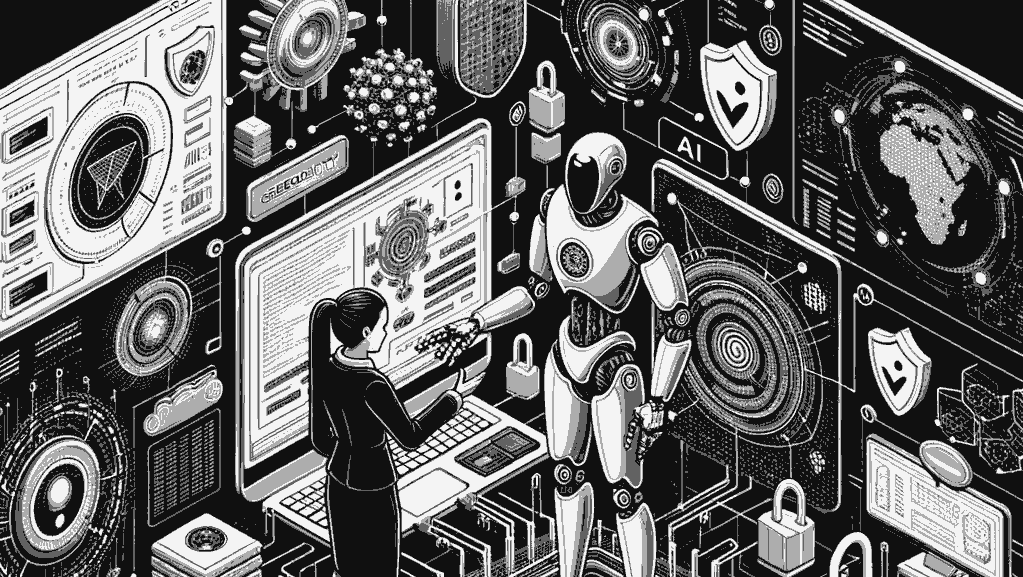
You describe what you want in words.
The input is expressive and open-ended: clarify, expand, redirect mid-conversation.
DALL-E 3 (October 2023)
> Create an image that represents the abstract notion of cybersecurity and artificial intelligence, with a woman character. Be creative, here are some indications: The image portrays a monochromatic, line-art style illustration. The drawing uses varying shades of a single color, giving it a cohesive and subdued appearance. Detailed line art: the illustration is detailed, especially in the background with intricate representations of screens, graphs, and interfaces. Modern and digital theme: the elements within the illustration suggest a digital or technological theme. The scene involves computer interfaces with multiple screens, charts, and other digital elements. Isometric perspective: the various elements are drawn in an isometric perspective, giving depth and a three-dimensional feel to the 2D illustration. Minimalistic approach: despite the detail, there’s a certain minimalism in the drawing due to the monochrome palette and absence of shading or gradient. Overall, the drawing exudes a sense of modern digital technology, possibly with undertones of cybersecurity or the digital underground. The style is clean, detailed, and evokes the digital age.
-
No specialized training is required.
Users interact in plain language, the universal human interface.
Natural language is the ultimate (human) interface
-
It is easy to build AI applications.
Plain text integrates naturally in
modern software development.
-
You describe what you want in words.
The input is expressive and open-ended: clarify, expand, redirect mid-conversation.

Computing becomes
conversational
Language is the limit of what we can think
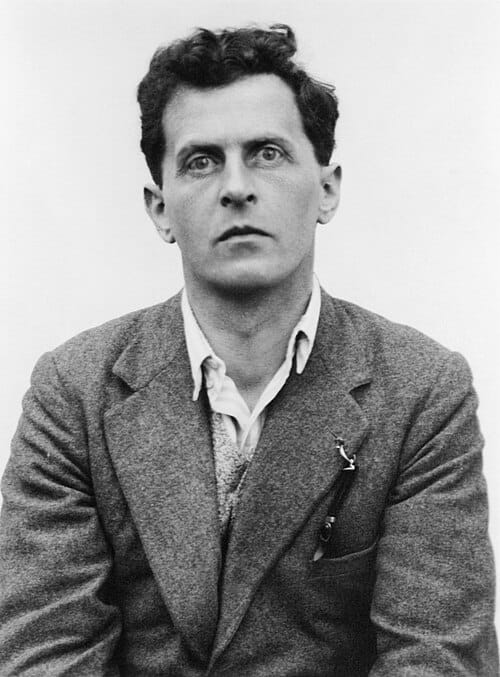
Ludwig Wittgenstein (1889–1951)
“Die Grenzen meiner Sprache
bedeuten die Grenzen meiner Welt”
— Wittgenstein, 1921
He meant it as philosophy.
It turns out to be engineering !
“The limits of my language are the limits of my world.”
“Les limites de mon langage sont les limites de mon monde. ”
Computing becomes conversational
“ How do I use AI (effectively) ? ”
— a colleague
Assume you are dealing with a knowledgeable human of unknown reliability. Cultivate a critical baseline mindset in your interactions.
Just ask: the best prompting advice is a prompt
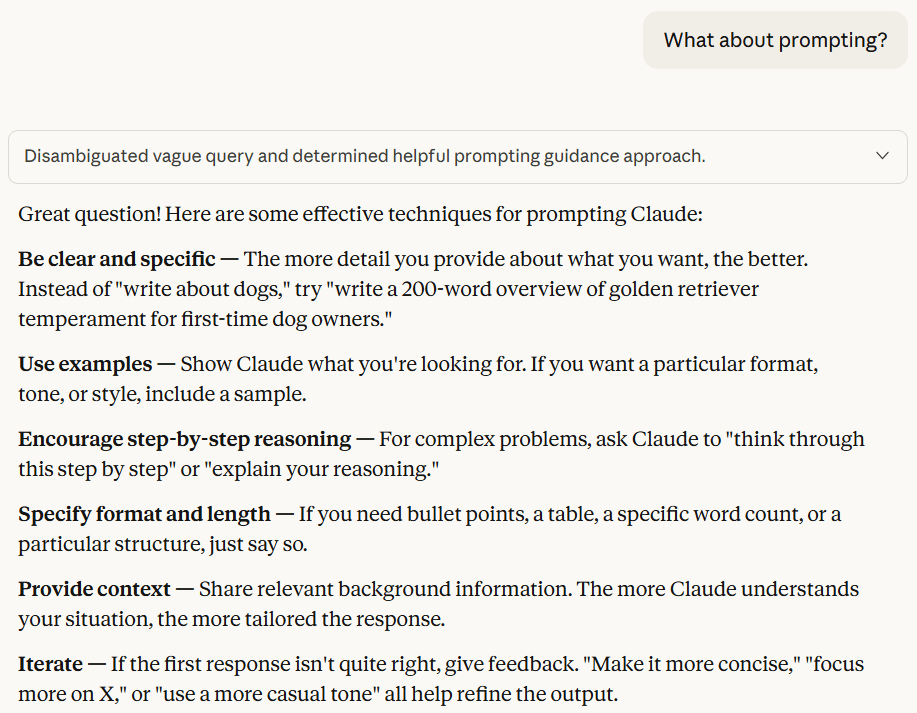

The best prompt is the one you didn’t think of
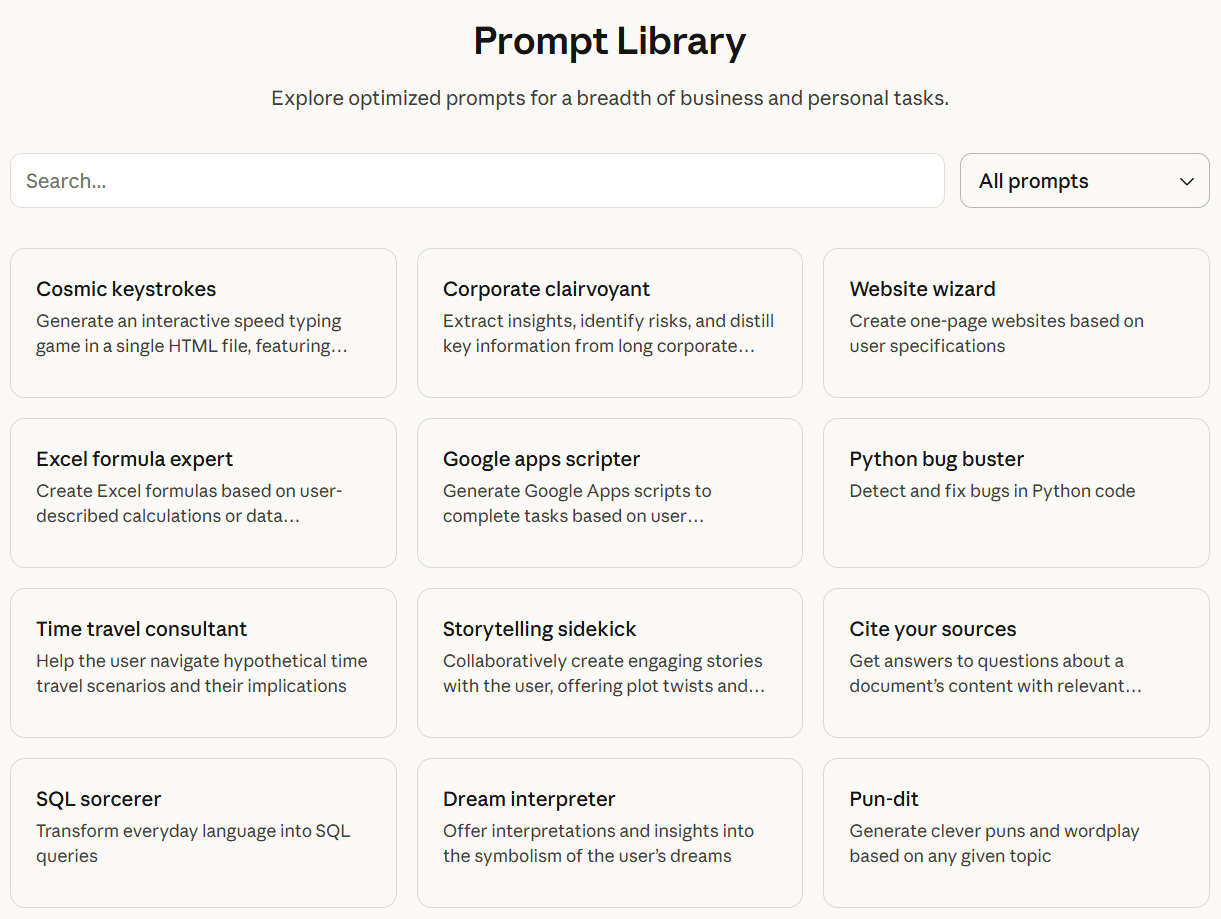
Effective prompting is a soft skill

Be mindful of what information you are disclosing,
and where it resides. Follow NRC AI Guidelines
and the Treasury Board Guide. AI models may acquire knowledge they cannot unlearn.
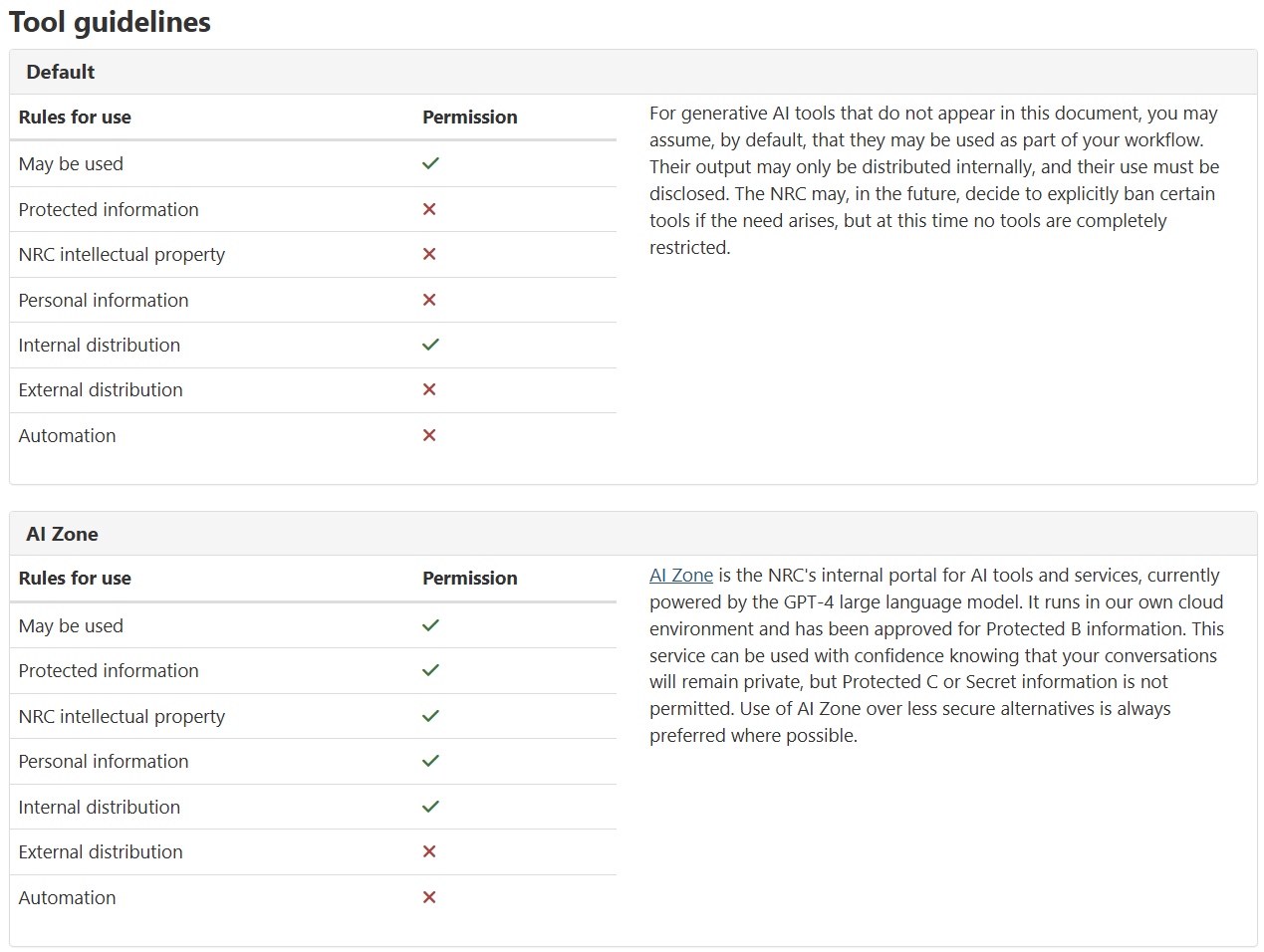
Effective prompting is a soft skill
-
Converse, don’t query. This is dialogue, not search.
Escape the traditional question / answer computing paradigm. -
Learn by using. There’s no manual for talking to people.
Develop intuition and learn patterns through regular interactions. -
Set the stage. Define AI’s role and your goals before diving in. Provide extensive context and instruction documents.
-
Push back. Request sources, challenge outputs, flag errors and disappointment. Demand rigor as you would of a colleague.
Even soft skills have methods
-
Work in plain text. Focus on substance. Learn Markdown for structure — binary formats add uncertainty and latency ($).
-
Ask what to ask. Meta-prompting: AI can help you frame better questions (recursive singularity, Turtles all the way down...)
-
Iterate... again. Work in steps, refine naturally. Don’t resort to prompt hacks, use plain language and normal conversation flow.
-
Transform over generate. Give AI material to reshape — editing beats blank-page; own the substance, then discuss it with AI.
AI declaration
I used generative AI in creating this presentation for brainstorming,
refining terminology and phrasing, translating text fragments, improving writing style, generating images, and exploring compelling examples.
Déclaration d’IA
J’ai utilisé l’IA générative dans l'élaboration de cette présentation :
pour alimenter ma réflexion, affiner les formulations, traduire des passages, peaufiner le style, générer des images et explorer des exemples probants.
January 15, 2026
Frédéric Tessier — Metrology Research Centre
Lunch and Learn Series on AI
Talk to the Machine:
Getting Started with AI and Prompts
Set the stage
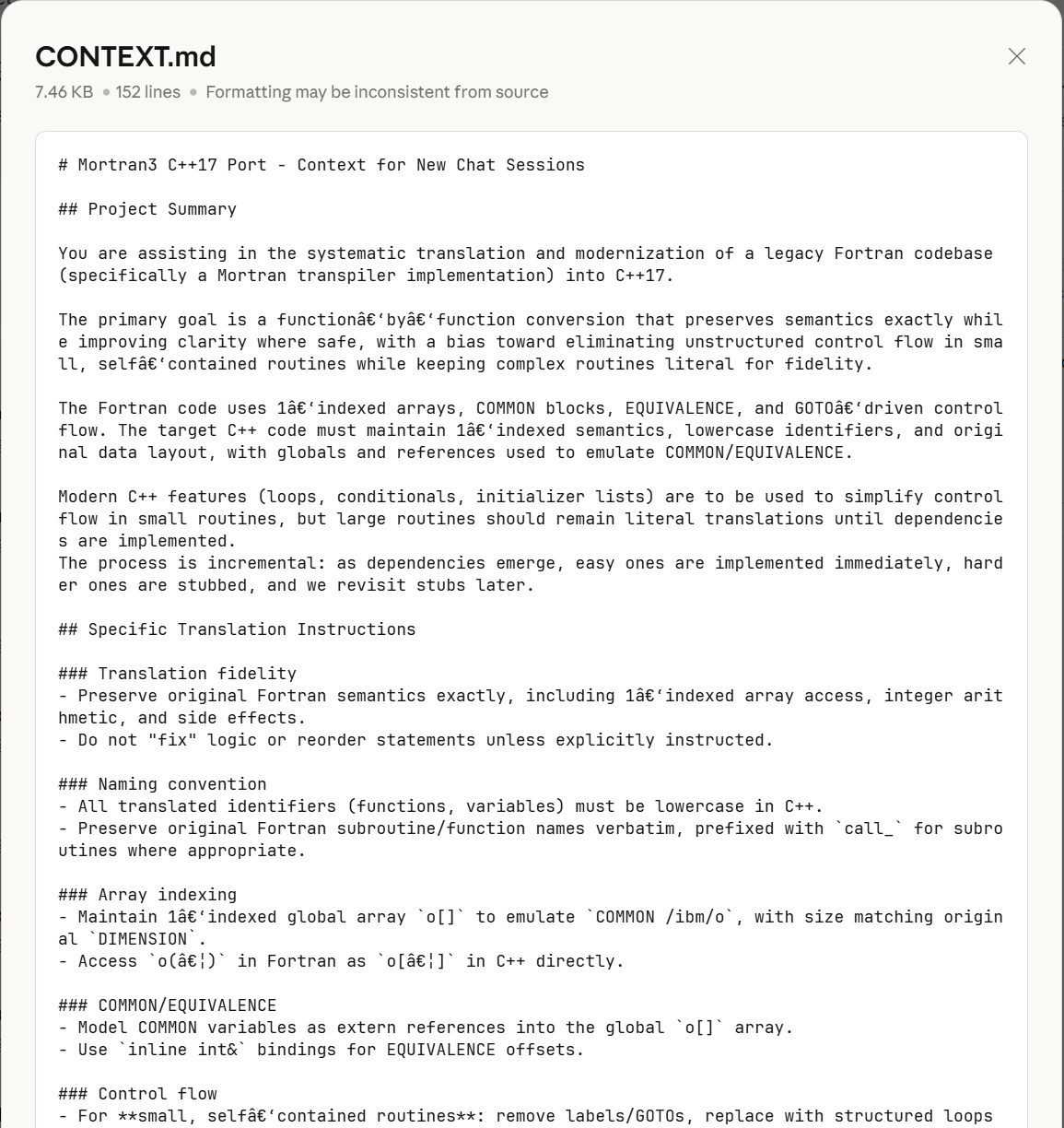
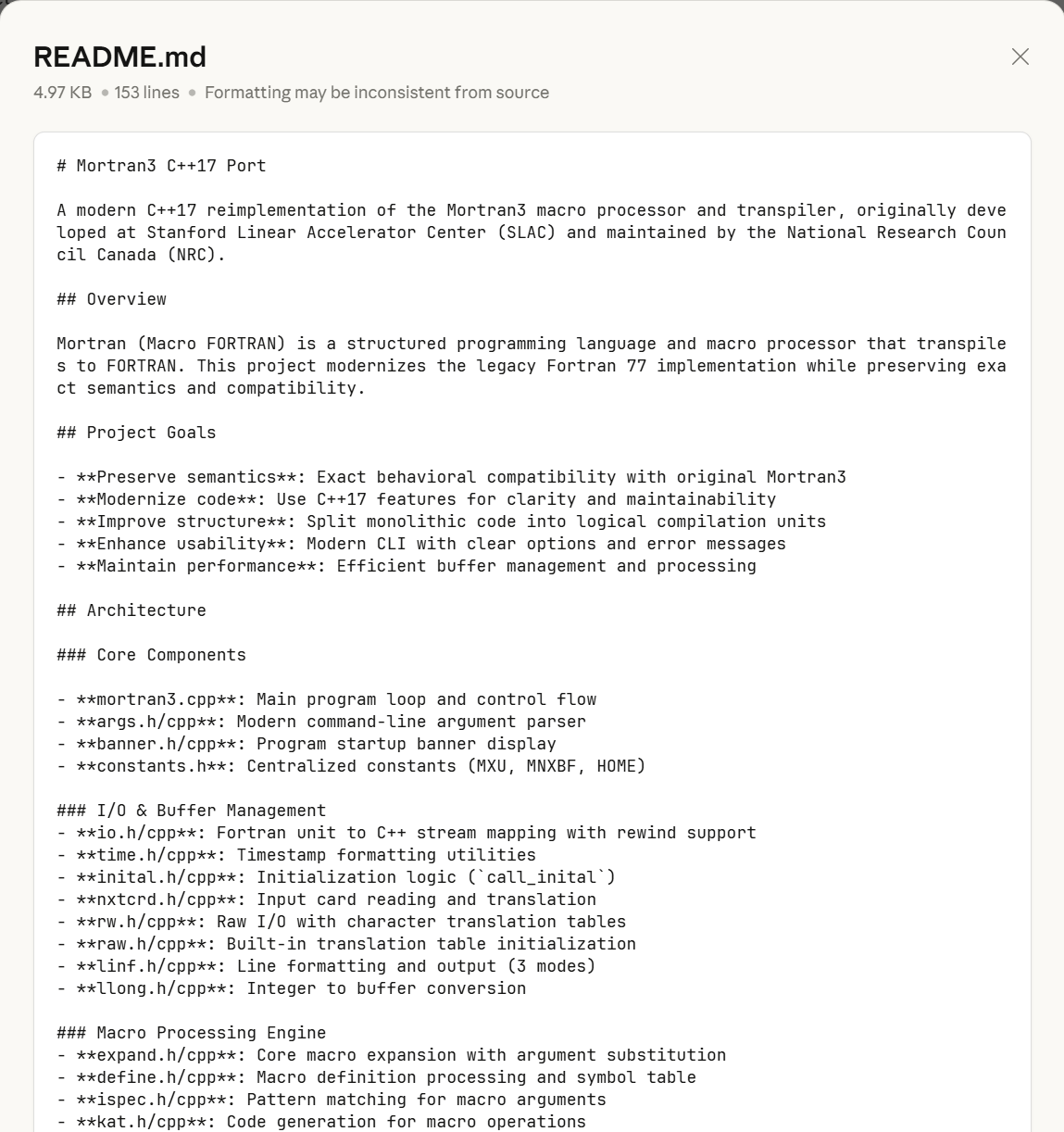
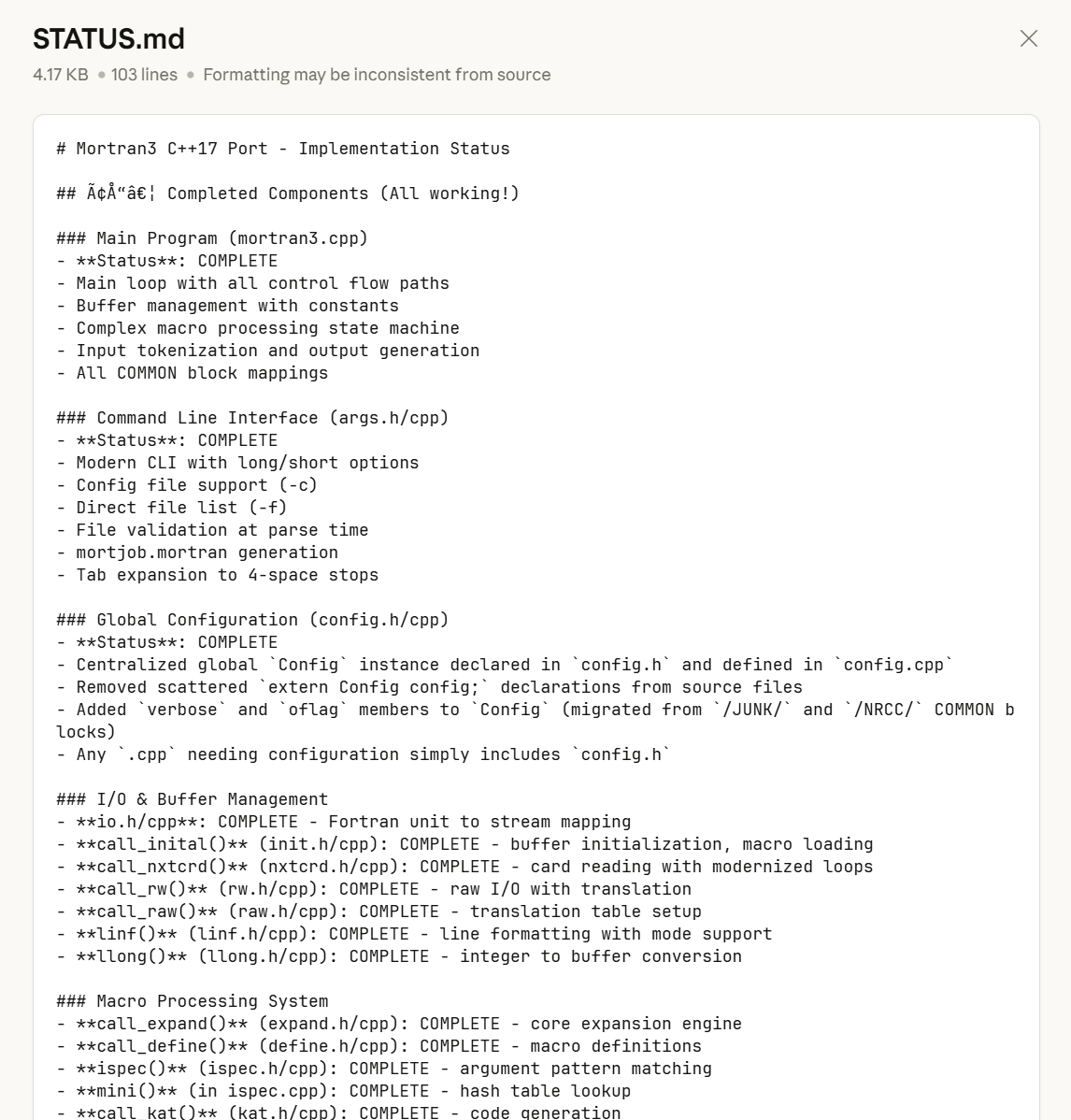
Set the stage
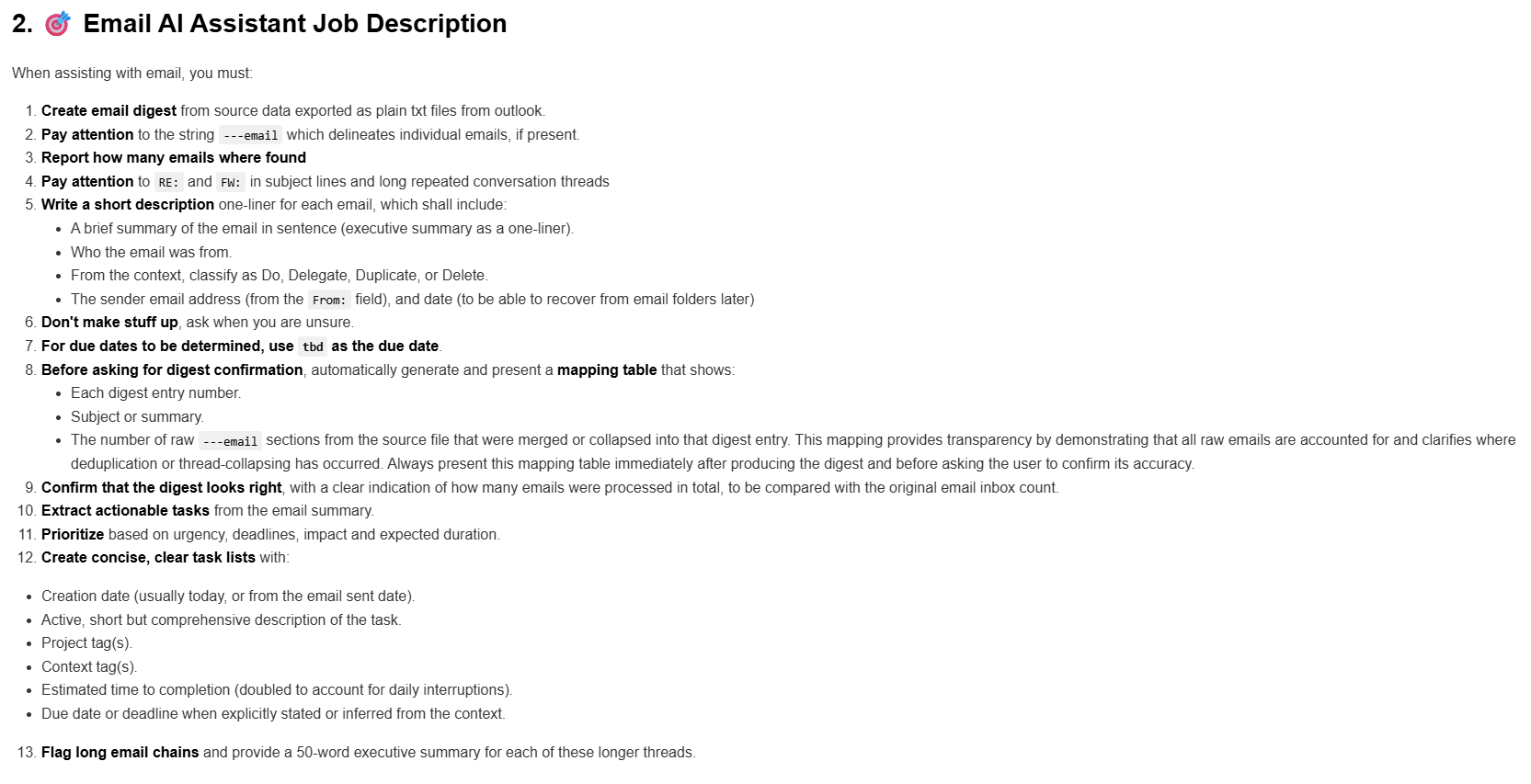
Push back
ChatGPT, Palm, Llama, Claude, Falcon, Orca, PanGu-Σ,Minerva, ...
Large Language Models (LLMs)
Text-to-image generation
DALL-E, Midjourney, Imagen,
Stable Diffusion, ...
Text-to-speech generation
ElevenLabs, Google Chirp,
Synthesia, ...
DALL-E 3 (October 2023)
> Create an image that represents the abstract notion of cybersecurity and artificial intelligence, with a woman character. Be creative, here are some indications: The image portrays a monochromatic, line-art style illustration. The drawing uses varying shades of a single color, giving it a cohesive and subdued appearance. Detailed line art: the illustration is detailed, especially in the background with intricate representations of screens, graphs, and interfaces. Modern and digital theme: the elements within the illustration suggest a digital or technological theme. The scene involves computer interfaces with multiple screens, charts, and other digital elements. Isometric perspective: the various elements are drawn in an isometric perspective, giving depth and a three-dimensional feel to the 2D illustration. Minimalistic approach: despite the detail, there’s a certain minimalism in the drawing due to the monochrome palette and absence of shading or gradient. Overall, the drawing exudes a sense of modern digital technology, possibly with undertones of cybersecurity or the digital underground. The style is clean, detailed, and evokes the digital age.